How to Start an SEO Agency in 2026

The traditional model of starting an SEO agency is broken. In the past, founders would try to do everything themselves: client acquisition, on-page optimization, content writing, and link building. This inevitably leads to burnout at around 5-10 clients, creating a hard ceiling on revenue and growth.
In 2026, the most profitable agencies operate as strategic consultants and sales organizations. They own the client relationship and the high-level strategy, but they outsource the heavy lifting—specifically off-page SEO and link building—to specialized white-label infrastructure providers.
The Scalable Agency Blueprint
1. Niche Selection
Do not be a generalist. "We do SEO for small businesses" is a terrible value proposition. Instead, become the undisputed expert in a specific vertical: "We build digital authority for multi-location dental practices." Niche selection allows you to standardize your deliverables, create repeatable case studies, and charge premium prices.
2. The "Front-End" vs "Back-End" Model
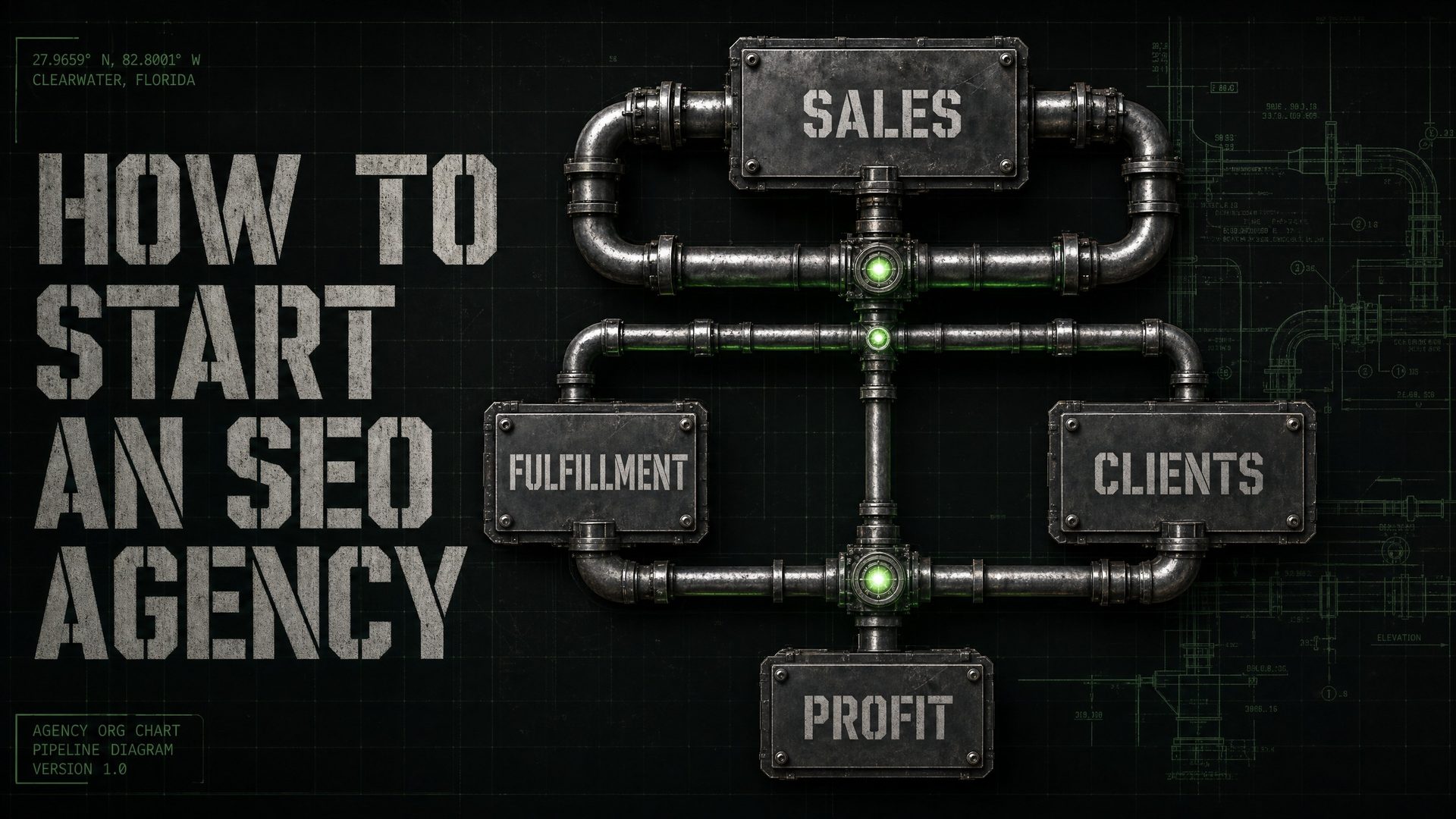
Your agency should focus 80% of its resources on the Front-End: sales, client communication, strategy, and reporting. The Back-End (the actual execution of link building, citations, and press releases) should be outsourced to a white-label partner. This allows you to scale from 10 clients to 100 clients without needing to hire an army of in-house link builders.
3. Pricing for Profitability
Never sell SEO as a commodity. If you sell "10 backlinks for $500," you are competing on price, and you will lose to overseas sweatshops. Instead, sell the outcome: "We will dominate the local Map Pack for 'Emergency Plumber Chicago' to drive an additional 30 inbound calls per month."
When you sell the outcome, you can charge based on value. If you charge $2,500/month for a local SEO campaign, your white-label fulfillment costs (Cloud Authority Stacks, citations, PR) should not exceed $750/month. This gives you a healthy 70% gross margin to cover your time, software tools, and profit.
The Rule of Thirds: A healthy agency allocates 1/3 of revenue to fulfillment (white-label costs), 1/3 to operations/sales, and keeps 1/3 as pure net profit.
4. Automating the Machine
Once you hit 10-15 clients, manual data entry becomes your biggest bottleneck. This is where API integration becomes mandatory. You must connect your CRM (like GoHighLevel) directly to your fulfillment partner's API.
When a client pays their monthly invoice, the CRM should automatically trigger a webhook to the LinkDaddy API, ordering the specific link building package required for that month. When the order is complete, the API pushes the unbranded report back to your CRM, which automatically emails it to the client. This level of automation is what allows a two-person agency to manage 100+ clients.
5. Client Retention through Reporting
Acquiring a client is expensive; retaining them is cheap. The key to high retention in an SEO agency is transparent, outcome-based reporting. Clients do not care about "Domain Rating" or "Trust Flow." They care about traffic, leads, and revenue.
Your monthly reports should tie the deliverables (the links built by your white-label partner) directly to movement in the SERPs, and tie that movement directly to an increase in organic traffic and conversions. When a client clearly sees that your $2,500 retainer generated $10,000 in new business, they will never cancel.
6. The Importance of a Sovereign Foundation
Before you build a single link for a client, you must ensure their foundation is solid. Sending high-authority links to a slow, bloated WordPress site is like pouring premium fuel into a broken engine.
As an agency, you should mandate that clients migrate to a Sovereign HTML architecture (like the ones built by LinkDaddy) before beginning off-page campaigns. This ensures maximum PageSpeed, perfect Core Web Vitals, and uncompromised security, providing the optimal environment for your link building efforts to take effect.
7. Scaling with API Integration
As your agency grows from 10 clients to 50 clients, manual order placement becomes a bottleneck. This is where API integration becomes crucial.
By integrating your CRM (like GoHighLevel or HubSpot) with your white-label partner's API, you can automate the entire fulfillment process. When a client signs a contract, the API automatically triggers the backlink campaign, tracks the progress, and pulls the final report back into your dashboard. This allows you to scale revenue infinitely without scaling your headcount.
Frequently Asked Questions
Do I need to know how to do SEO to start an agency?
You need a foundational understanding of SEO strategy, client communication, and sales. However, you do not need to execute the technical deliverables yourself. The most successful agencies use white-label partners for fulfillment.
What is white-label SEO?
White-label SEO is when you hire a third-party provider (like LinkDaddy) to execute SEO services on your behalf. The provider does the work, but the reports are branded with your agency's logo, allowing you to mark up the price and sell it to your clients.
How much should I charge for SEO services?
Pricing depends on your niche and the scope of work. Most successful agencies charge between $1,500 and $5,000 per month for comprehensive local or national SEO campaigns. Your margin should be at least 50% after paying your white-label provider.
How do I get my first SEO clients?
Start with your existing network, attend local business networking events, offer free mini-audits to businesses with poor Map Pack rankings, and leverage LinkedIn outreach targeting specific niches (e.g., roofers, dentists).
What is the hardest part of running an SEO agency?
Fulfillment and scaling. As you acquire more clients, the operational burden of building links, writing content, and technical audits becomes overwhelming. This is why API integration and white-label partnerships are critical for growth.
Scale Your Agency with LinkDaddy
Stop building links manually. Partner with LinkDaddy for wholesale, white-label fulfillment and focus on what actually grows your agency: sales and strategy.
View White-Label Programs